A look back on 2026
The talks that shaped AI Council 2026.




2026 Featured Talks
Highlights from AI Council 2026 — the talks that defined the year.
All 2026 Talks
Every session from 2026 — filter by topic, speaker, or company.
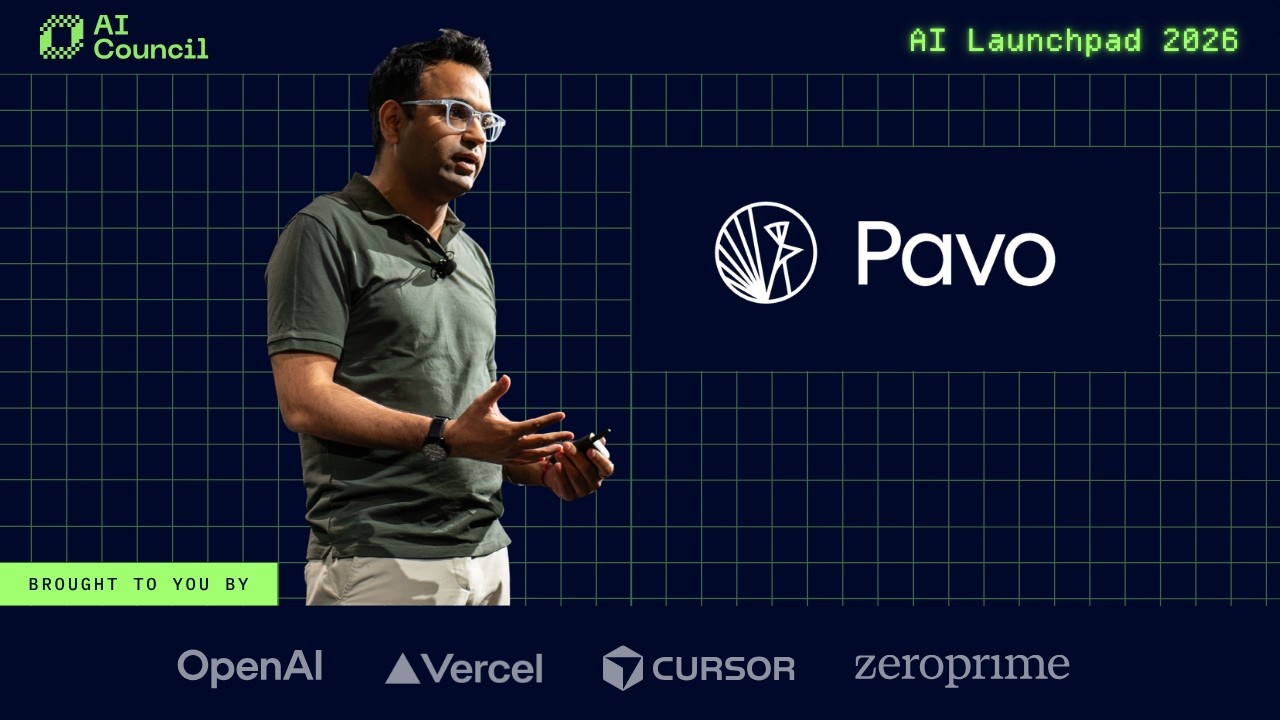
AI Launchpad 2026: Pavo
Pavo builds systems-first intelligence for the enterprise: self-evolving knowledge systems, agent societies, and world models that learn from experience to optimize business outcomes.

AI Launchpad 2026: Mixtrain
Mixtrain provides infrastructure for the full post-training lifecycle, spanning data curation, training, evaluation, and deployment.

AI Launchpad 2026: Golden Analytics
Golden Analytics is an AI-native business intelligence (BI) platform designed to automate mechanical data tasks like data prep, visualization, and presentation generation.

AI Launchpad 2026: CocoIndex
CocoIndex fills the gap of context layer for AI where it continuously takes source and transforms it incrementally on source change or logic change to serve live AI agents, at scale.


AI Launchpad 2026: LogicStar AI
LogicStar finds, investigates, and resolves code issues that matter before they become incidents.

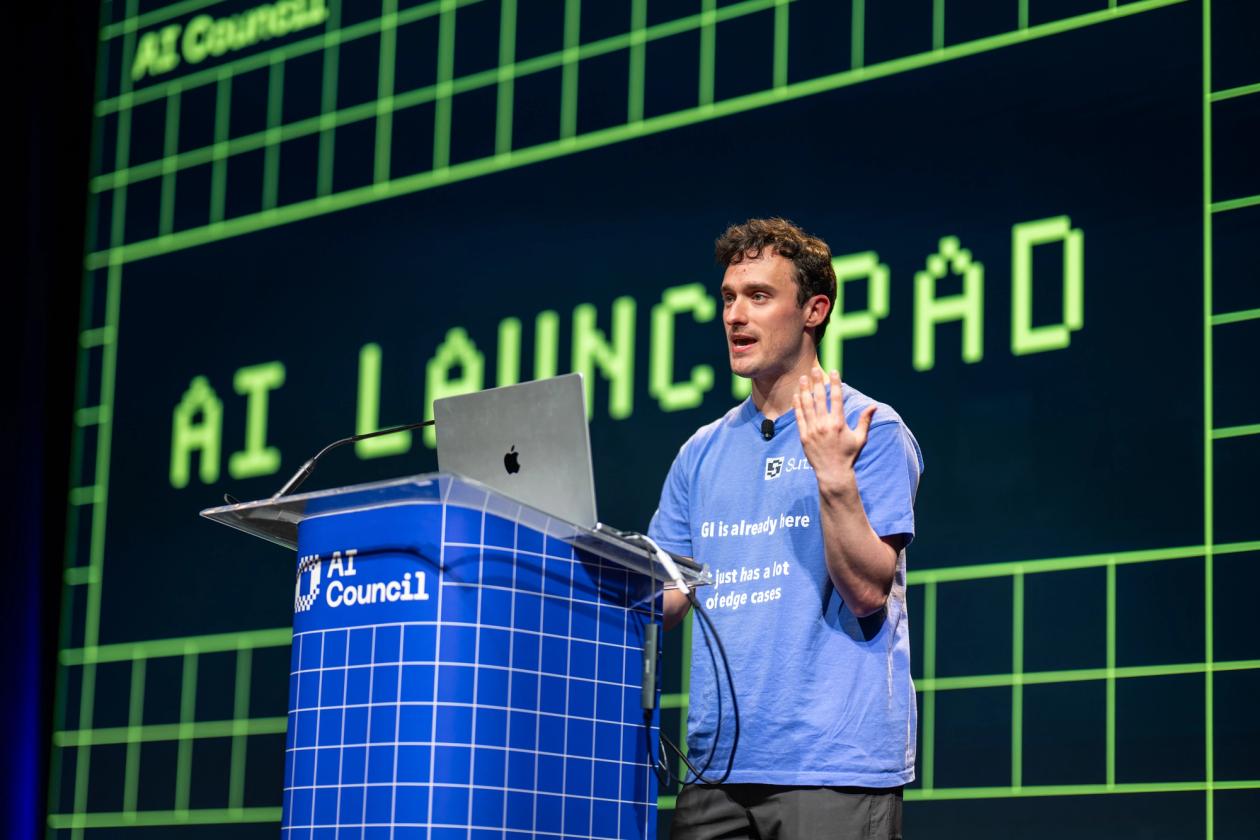
AI Launchpad 2026: Sutro
Sutro enables AI teams to build high-volume, expert-aligned models they can trust at scale, reducing manual review time by 90% and inference costs by 80%.


Inference for Async Agents in Production
As models improve, we are starting to build long-running, asynchronous agents such as deep research agents and browser agents that can execute multi-step workflows autonomously. These systems unlock new use cases, but they use orders of magnitude more tokens and compute, creating scaling bottlenecks. This talk discusses practical strategies builders can use to maximize async agent performance while keeping inference costs under control. Topics covered include context engineering, compaction, cache maintenance, model routing, and batch inference. This talk is aimed at use case developers, with secondary relevance to platform engineers.

Running Millions of (Millisecond) AI Sandboxes without Breaking the Piggy Bank
Agents are great, but they place difficult requirements on the underlying infrastructure they run on: (1) they need to be strongly isolated (eg, within a VM); (2) they need to start up as quickly as possible (ideally in milliseconds) and put to sleep when not used; and (3) they require massive scale (eg, millions of them for even a single provider/product). Using standard infra to run sandboxes at this level of scale can result in eye-watering cloud-infra bills. And attempting to start sandboxes in milliseconds is an unsolved challenge. In this talk we’ll cover our years-long journey aimed at severely optimizing and increasing the efficiency of how workloads are deployed on the cloud, beginning with research and OSS work. Along the way, we’ll cover the basics of virtualization and isolation primitives (e.g., virtual machines, microVMs, containers, isolates) and their performance and security trade-offs. With that in place, we will describe how we leveraged the research and OSS work to build a virtualization system that can start any workload in a few milliseconds, and cram up to 1M+ such lightweight VMs into a single, off-the-shelf server, allowing for millions of strongly-isolated agents to be hosted in a rack, rather than an entire data center. Finally, we will show a brief live demo of this in action.

Do the Boring Stuff to Make Open Source AI Win
"Open source AI just isn’t as good as OpenAI, Anthropic, and Gemini.” Needing to reach performance parity with closed source frontier models is the prevailing north star for open source AI - and this is an important goal! Here, I’ll make the case for a different north star: ease of use. Open source AI can win if it becomes dead easy to use, the simple default option for the 99% of AI use cases that don’t require the newest frontier mega-model. The missing piece is being so easy to install, maintain, and use that customers aren’t tempted to default elsewhere. That means our community moving beyond benchmarks to beautifying UI/UX, reducing jargon, building catchy apps, and meeting the modal end-user where they are - *not* just on GitHub or Hugging Face, but rather in the address bar of a browser or the app store. Throughout, I’ll talk about some of the decisions we are making at Mozilla to support our “choice-first stack,” a portfolio of commercially-licensed open source AI projects meant to take steps toward making open source AI more approachable, maintainable, and usable.

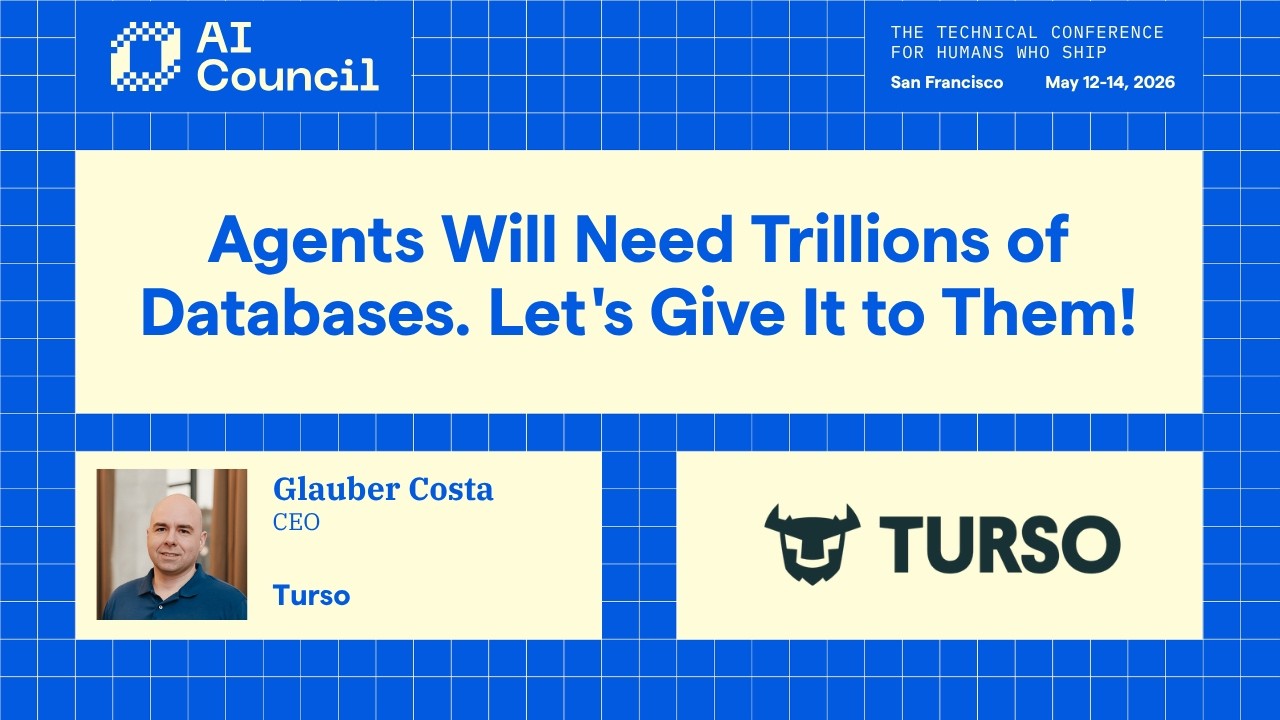
Agents will need trillions of databases. Let's give it to them!
The same way computing for agents is evolving into sandboxes, data infrastructure for agents will necessitate the provisioning and maintenance of trillions of databases. From agent memory, session data, to the mind-boggling number of databases vibe-coded applications will need, it is clear we need databases that come online instantly and are individually cheap. SQLite is widely acknowledged to have the right shape for this, but it also at the same time lacks the extended feature set that modern applications need. In this talk we will present Turso, an open- source rewrite of SQLite in Rust, that keeps full compatibility with its file-based nature while expanding what it can do.

Showing 10 of 86
The voices that shaped 2026
Learn from the engineers at OpenAI, NVIDIA, and Anthropic who are moving the industry forward.

Abhay Singhal
Member of Technical Staff, Factory

Alex Mashrabov
Co-founder & CEO, Higgsfield

Allie Howe
Insecure Agents Podcast, Host

Amruta Moktali
Chief Product Officer, Skyflow

Andrew Qu
Chief of Software, Vercel

Andrew Zigler
GTM Eng & Podcast Host, LinearB / Dev Interrupted

Andy Kimball
Fellow, CockroachDB

Apoorva Joshi
Staff Developer Advocate, AI/ML, MongoDB